Tampa Bay Area Low-Waste Event Guide
What is a low-waste event?
A low-waste event aims to reduce environmental impact by minimizing waste sent to landfills by using sustainable materials, diversion methods and outreach.
Low waste is different from zero waste. Zero waste means absolutely no garbage sent to landfill. Not all events can be zero waste. But every event organizer can do their best to reduce waste sent to a landfill – that is low waste.
Who can use this guide?
This guide is intended to help event organizers and vendors in the Tampa Bay area reduce the amount of waste generated at events in their communities.
Why should you care?
The Tampa Bay area has a garbage problem. Several communities utilize waste-to-energy facilities to burn garbage and produce electricity, and the remaining ash takes up much less space in landfills. However, regional waste-to-energy facilities are not a magic wand. Because of factors like population growth, the region is producing more garbage than waste-to-energy facilities can process. Landfills are filling up, and because the area is so densely occupied, there isn’t much room to build new landfills.
Once landfills fill up, governments will need to manage garbage in other ways. This could include trucking garbage elsewhere, which would be three to five times more expensive for future generations.
Landfills produce greenhouse gases, including methane and carbon dioxide, that contribute to climate change. Once a landfill is closed, it takes up space forever, is expensive to maintain and is difficult to transform into usable land.
Recycling helps keep waste out of landfills. It also conserves natural resources like trees, water and minerals that are used to make new products.
It’s important to create less waste to protect the places we live, work and play in the Tampa Bay area for future generations.
Source: UF Bureau of Economic and Business Research, Florida Estimates of Population 2023.

Population: 3 million

Seven million tons of waste per year

Four Waste-to-Energy Facilities

Limited landfill life
What is the best way to manage waste?
The U.S. Environmental Protection Agency’s Waste Management Hierarchy suggests managing waste from the most preferred to least preferred options: reduction of waste generated; reuse of resources; recycling and using the same raw ingredients to make new products; creating electricity and reducing the volume of garbage via waste-to-energy; and landfilling as a last resort.

A low-waste event should aim to create the least amount of garbage possible by following the waste management hierarchy. Creating less waste is the best approach to conserving landfill space.

Planning Checklist
-
During the planning process, set goals that will help make the event low waste. Effective goals are SMART.
Specific: Your goal should be well-defined, detailed and clear.
Measurable: You should be able to tell when you reach your goal.
Achievable: Can you reach the goal, taking into account your available time, skills and financial resources?
Realistic: Is your goal realistically achievable within the given time frame and with the available resources?
Timely: Set a start and finish date for your goal.
Set diversion rate goals. A diversion rate is the amount of waste being reused, recycled, composted divided by the total amount of waste generated at the event.
Diversion rate = (waste reused + recycled + composted) / (waste reused + recycled + composted + garbage)
Example diversion rate: A community block party collected 50 pounds of recyclable containers to be recycled, 50 pounds of food waste to be composted, and 50 pounds of garbage. The diversion rate is 50 pounds recycled + 50 pounds composted / 150 total pounds waste produced = 66.7%.
Example goal: Offer recycling bins next to each garbage bin to divert at least 50% of the waste generated at the event from the landfill.
-
Forecast the number of event attendees.
Use a reservation booking system or request that guests RSVP. Examples of reservation booking systems include Eventbrite or Google Forms. Check with the event host regularly to get updated attendance forecasts. Share forecasted attendees with vendors. This helps food vendors plan accordingly so food isn’t wasted.
Forecast the types of waste that will be generated.
Customize the signage for what belongs in each waste receptacle to the types of waste that will be at the event.
Work with vendors and caterers to evaluate the types of waste that might result from the event. Tips for implementation:
Mention low-waste effort in the vendor sign-up form with specific event requirements and a link to resources.
Meet with vendors and further explain the low-waste event goal in the early event planning phase to discuss any concerns, explain incentives and share resources.
Account for “sneaky waste” or waste that you might not account for in your original plan, like when people bring in outside food and beverages. Train low-waste volunteers about handling sneaky waste ahead of the event.
-
Create a low-waste plan that includes how waste is being picked up. Determine who is collecting garbage and recyclables. Determine whether you plan to offer food scrap composting. Choose waste hauling companies if the venue does not have a pre-existing contract. How waste is managed will depend on the venue, municipality or county.
After the event, collect and clean up any waste that was littered or improperly discarded by attendees. Have a volunteer clean-up team or engage a local nonprofit that may offer these services. For example, a Keep America Beautiful affiliate like Keep Pinellas Beautiful, Keep Tampa Bay Beautiful and Keep Manatee Beautiful.
Example: In the City of Tampa, Bead Free Bay holds bead drives to help clean up discarded beads after Gasparilla events.
Sustainability Tip
It’s common for products with various ‘green’ labels to be accompanied by a higher price tag. Understand the meanings behind the labels to make sure you are being eco-friendly and using your budget wisely.
-
Establish a low-waste team, including supervisors, partners, volunteers and vendors to help meet your low-waste goals.
For municipal events, ensure the event goes smoothly by including team members with critical roles for event implementation, such as Special Events Manager, Solid Waste Manager, Parks or Facilities Supervisor (depending on location), Volunteer Coordinator, Marketing/Communications Staff and Community Engagement Staff. These individuals could serve as ad-hoc or subject matter expert advisors even if not formally on the project team. Get their buy-in from the beginning!
Tip: Incentivize high school-aged volunteers by offering credit for hours toward programs such as the Florida Bright Futures Scholarship Program.
A low-waste team can…
Meet with stakeholders, such as event executives, site owners, vendors and contractors to communicate your goals.
Work at waste stations.
Help with tracking progress.
-
Publish your event’s environmental commitment.
Include your stated commitment in your promotional materials. This can help influence sponsors, vendors and presenters to make sustainable choices.
Consider announcing your low-waste initiative periodically throughout the event to educate and motivate attendees. Include information that will prepare event attendees for what to expect and how they can reduce their waste. For example, encourage attendees to bring a reusable water bottle if refill stations are provided or bags if goodies are expected to be given away. Advertise that recycling will be available or provide the digital event map.
Sustainability Tip
Go paperless! Create a digital marketing plan for your event. Use resources such as social media and email marketing. Send registration packets and other event materials electronically to attendees and vendors. For signing contracts, use digital signing software like Docusign and Adobe Sign. Use digital tickets to check attendees in.


Tips
-
Waste stations contain separate bins for each type of waste being generated at an event, including recycling, compost and trash. When all types of waste bins are together, it is easier for event attendees to properly get rid of all their waste items at one time.
Any waste bin by itself becomes a trash bin regardless of the label on it.
Make a plan for waste stations. If you already have an event map, include waste stations.
Determine the number of waste stations.
Determine locations.
Assign volunteers to each station so they can guide attendees to place the right items in the right bins to prevent contamination. Train volunteers on what type of waste belongs in each bin.
Designate one bin for each type of waste at each waste station.
Order waste bins, liners (as needed) and signs if they are not provided by the venue (research any local rental opportunities to reduce waste).
Label each container for proper use. Use standard recycling bin labels, which can be found at recycleacrossamerica.org/labels. Or, use pictures of the specific waste items generated at your event.
Determine how waste will be measured. Weigh waste using scales, use cubic yards to measure waste by volume or count the number of bags of waste. Reference this estimated material weight fact sheet for helpful conversions.
Coordinate with volunteers for the day of the event.
Assign and schedule volunteers to each waste station to help attendees categorize their waste.
Provide branding, like T-shirts or reusable name tags, to help event attendees identify volunteers.
Provide training on what waste goes in which bin and why.
Communicate how vendors and staff should get rid of their waste and remind them of event goals.
-
Event planners and coordinators should consider encouraging vendors to make individual plans to reduce the amount of waste the vendor produces. Communicate expectations for waste reduction to vendors at the earliest planning stages of the event. Consider hosting a virtual meeting with vendors to review low-waste event goals, share their individual plans, and have the opportunity to collaborate and improve their plans prior to the event. One option is to require that vendors use or not use specific items like foam packaging.
Incentivize vendors to reduce their waste by offering to promote their business. Examples include:
Designate premier booth locations.
Create vendor spotlights and recognition in advertising or marketing.
Award vendors that meet certain criteria and share distinctions on social media. Award examples include low-waste certifications or challenges.
Provide a small grant for purchasing compostable materials or a discount code with a local vendor partner for the event.
Highlight low-waste vendors near the event entrance on digital signage or paper signage that can be reused or recycled.
Offer VIP passes for vendors to share with key clients or guests.
Develop partnerships with highly engaged vendors and work with partners at future events. Consider growing into a cohort of sustainable vendors.
Waive or reduce vendor fees.
-
Reduce waste that comes along with serving food and drinks. Examples for ways to do this include:
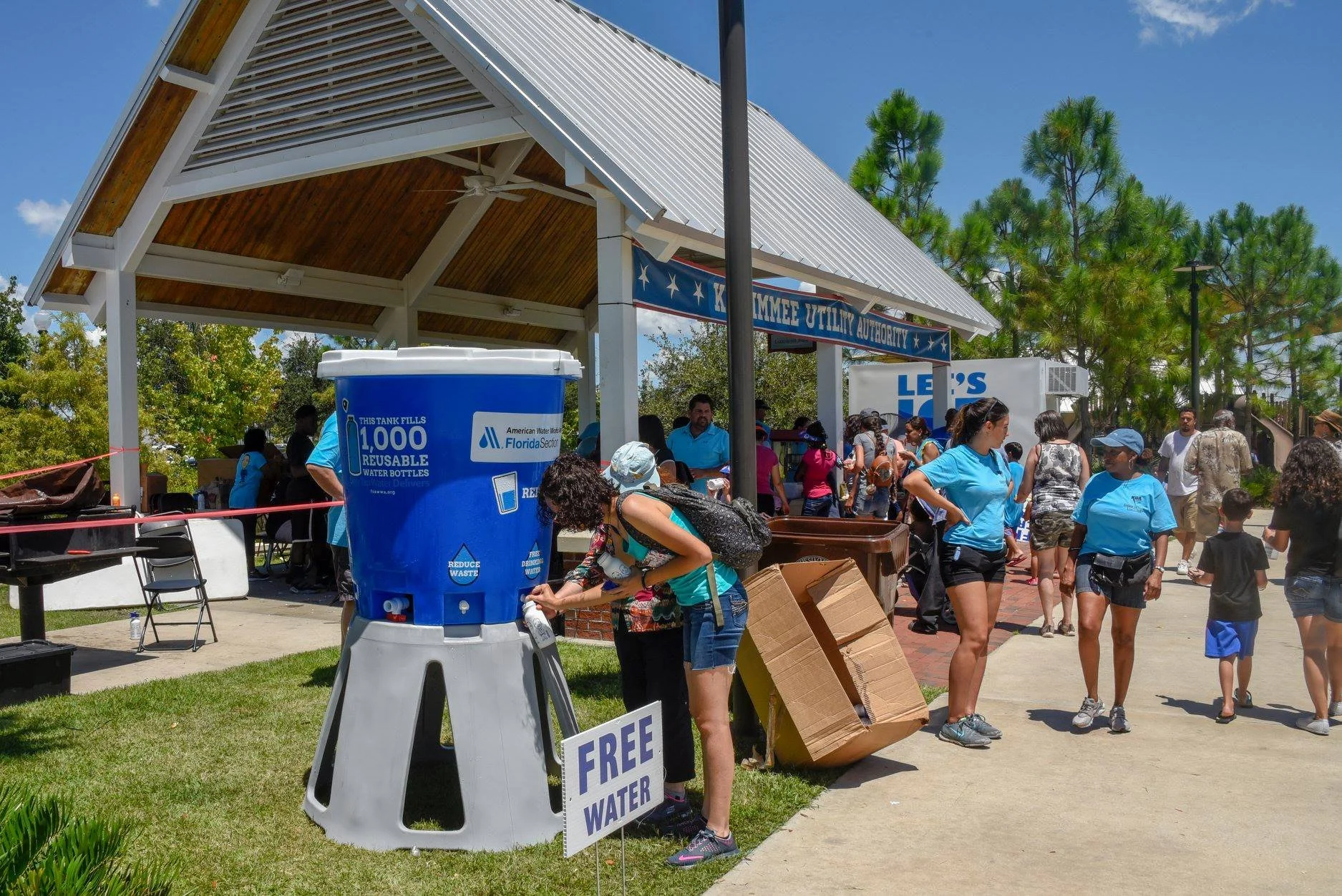
Offer refill stations for tap or filtered water instead of bottled water. Encourage participants to bring reusable water bottles. For example, water bottle refill stations could be as simple as water coolers or jugs with spouts or more robust like a WaterMonster station or Quench Buggy truck. Consider incorporating an incentive for attendees that bring a reusable water bottle such as a stamp that gives them a discount or raffle or activity entry.
Serve finger food or buffet-style serving options to reduce the need for single-use cutlery.
For pet-friendly events, encourage vendors to have water bowls.
Consider low-waste gifts and prizes for event attendees, such as digital gifts like free passes or discount codes, seed packets (ensure local or native) or other eco-friendly (compostable, recycled product, reusable) or practical items like reusable cutlery. Research promotional item or swag companies that have eco-friendly options. Check product material details before making your selection.
Consider using a prize wheel or setting any swag items out in smaller batches to limit the number of items each individual can choose.
Check with vendor company and ensure swag items are not individually wrapped which could lead to a significant waste or littering issue.
Consider alternatives to sharing information via paper handouts or signs.
Instead of directional signs, use TVs or staff and volunteers to direct attendees.
Consider replacing paper documents with digital surveys, sign-in sheets and event webpages instead of paper flyers. Use posters with QR codes to minimize handouts like maps. Consider assigning volunteers to a centralized event information table to help less tech-savvy attendees access digital information. If the use of paper is needed, minimize it by posting event information in centralized locations or one per table to reduce the copies needed, and encourage attendees to take a photo instead of the flyer to reduce waste.
Remember, avoiding unecessary products altogether is reducing waste and is aways the best option!
Sustainability Tip
Outdoor events during daylight hours come with the benefit of natural lighting. For events at night, LED lighting is preferable to other lighting options.
-
Donate leftover or unused food. For resources, see the Florida Food Recovery Resource Guide produced by the Florida Department of Agriculture. Check if there is a local fire station close-by as they have 24/7 operations and are always a good option for bringing leftover, good quality event food.
Use reusable tablecloths, service ware, plates, cutlery and decorations. Choose a venue that supplies reusable tablecloths, service ware and reusable decorations.
Choose multi-use decorations and event materials that are evergreen. For example:
Reusable signage (e.g., without dates or locations, made with durable materials that can be reused in future years, with removable or replaceable pieces where sponsor/partner logos go so that they can be changed for future events)
Reusable name tags Collect forgotten reusable goods post-event such as chairs, backpacks/bags, bottles, sunglasses, and more. Consider having a lost-and-found container or donate the found goods to charitable organizations.
-
Serve drinks in recyclable packaging like metal cans or plastic bottles.
Place a recycling bin next to each garbage can.
Choose a venue that has recycling bins and pick-up services.
Print signs on recycled paper or recyclable materials.
-
Currently, the Tampa Bay area has limited capacity for diverting food waste streams away from landfills.
Purchase compostable service ware and offer composting. Consider incorporating a bulk purchase of compostable service ware, cutlery, plates, cups, etc. into the event budget for vendors to use at the event (there may be municipal or local grants available for a bulk purchase or local opportunities to transition a cohort of businesses to use low-waste products). If composting is not available, consider paper alternatives and plastic as a last resort. Compostable items are typically not recyclable, except for clean, unlined paper products.
Tampa Bay Area compost companies include Suncoast Compost by Renuable and Renuable.
Sustainability Tip
Source local food, beverage, and product options.




Resources
-
Learn about Pinellas County’s vision of zero waste to landfill and the strategies the Solid Waste department is taking to reach it in the Solid Waste Master Plan. Pinellas County’s one and only landfill is expected to fill up in less than 80 years – only 2.5 generations.
Use the Where Does It Go? Search Tool to find reuse, recycling, and disposal options for hundreds of items in Pinellas County.
Learn about recycling right in Pinellas County by reading the latest edition of the Recycle Guide.
Check if your local municipality has any additional resources to support more sustainable operations.
-
Review Hillsborough County’s Solid Waste Section of the Countywide Comprehensive Plan, which includes the official adoption of the US Environmental Protection Agency’s waste management hierarchy (pages 178-183).
Join the Reduce Your Use Tampa Bay campaign! A regionwide awareness effort to reduce waste and celebrate businesses who are leading the charge in waste reduction. Take the pledge and support local sustainable businesses.
Request a free presentation for your organization on recycling and waste reduction. Businesses can also request a free commercial recycling consultation to start or improve a recycling program. Contact Recycling@HCFL.gov to learn more.
Adopt-a-road, beach, or pond and support Keep Tampa Bay Beautiful to keep our Hillsborough community clean.
Educate yourself and others on how to recycle right by reviewing the Recycling Guide.
-
Not sure how to properly dispose of something? Visit the Waste Wizard: Garbage or Recycling? - Manatee County (mymanatee.org), where you can look up information for disposing of solid waste & recycling materials.
Learn about recycling right in Manatee County by visiting the (Talking Trash) web page Talking Trash - Manatee County (mymanatee.org).
Track Your Progress
Measure waste generated by collecting the weight or number of bags of each type of waste. Measure waste reduced by using Remora, the locally developed tool to track uses and refusal of single-use plastics. Use the data to determine if the goals were achieved and record lessons learned.
Evaluate what worked and didn’t work and make notes for future events; remember to take pictures.
Schedule a post-event meeting with event coordinators as close to the event as possible (while thoughts are still top of mind) to review what worked and didn’t work at the event and document suggestions for future events.
Conduct an exit survey for participants and vendors to evaluate the event's success and include questions about the low-waste initiative. Analyze the results to identify best practices and areas for improvement.
Calculate and evaluate whether there were cost savings by hosting a low-waste event. Add up and compare the total cost of waste removal for compost, recycling and garbage for the scenarios of your event with and without low-waste goals. Include cost savings from avoiding the purchase of single-use items like disposable plates and water bottles.
Communicate accomplishments with attendees, sponsors and other stakeholders as appropriate.
This guide was created by Pinellas Partners in Recycling is an advisory and networking group focused on recycling, waste reduction and managing garbage as a resource. Its members are from the public sector, private sector and non-governmental organizations across the region.











City of Clearwater, CocaCola Beverages Florida, City of Dunedin, Eckerd College, Florida Department of Environmental Protection, Gasparilla Music Festival, Hillsborough County, City of Largo, Manatee County, City of Oldsmar, Pinellas County Solid Waste, City of St. Petersburg, City of Tampa, City of Treasure Island, Waste Pro